What a deep cleansing facial involves, step by step, who it suits, what results to expect, how often to book it and how to care for your skin afterward.
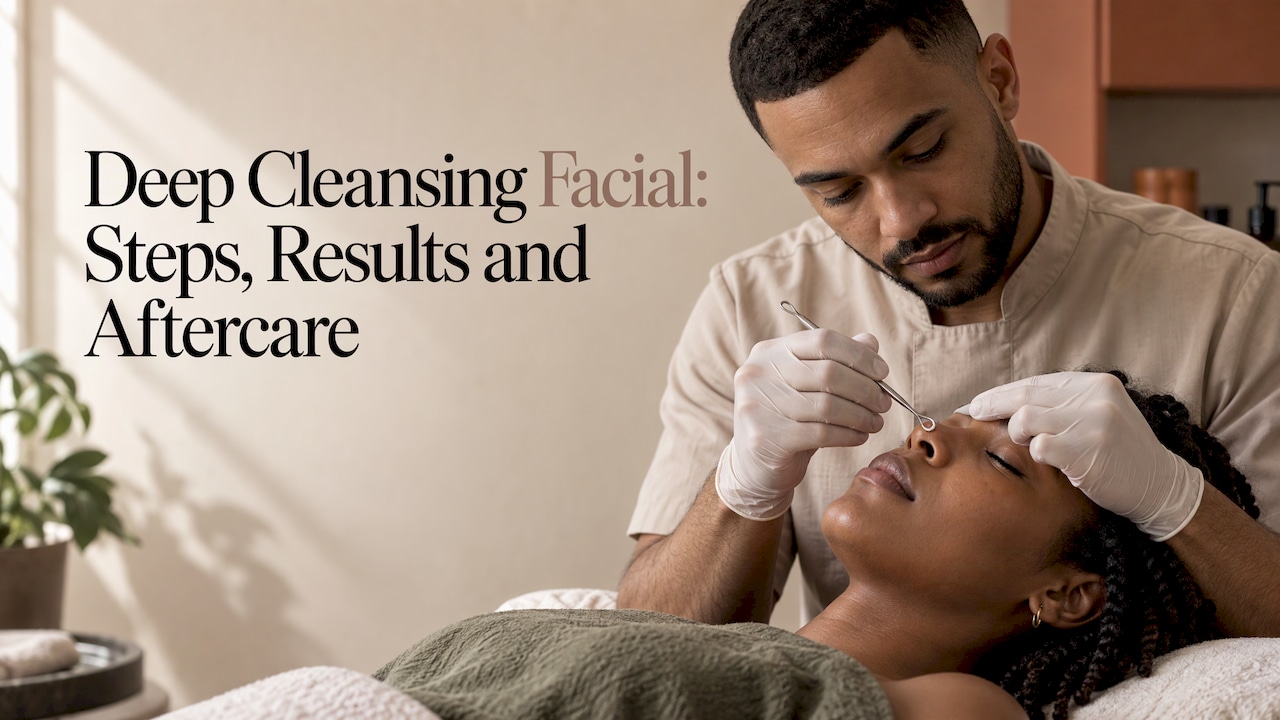
A deep cleansing facial is a professional treatment that clears the pores of oil, dead skin cells and debris through cleansing, exfoliation, steam and, when appropriate, manual extractions. Expect about an hour, a skin that feels clearer and smoother, and a short list of aftercare rules. It suits oily, congested and dull skin best. It is not a cure for acne, and it is not the right choice for inflamed or very reactive skin. Here is what happens in the treatment room, what it can realistically do, and how to get the most from it.
TL;DR
- A deep cleansing facial is a multistep treatment that targets clogged pores, excess oil and dull texture. Most professional facials take about an hour and cost between $75 and $200.
- The usual sequence is consultation, cleanse, exfoliation, steam, extractions (when suitable), mask, serum and moisturizer with SPF.
- Results are real but modest and temporary. Facials do not cure acne.
- Skip or postpone it if you have open wounds, inflamed acne, active rosacea, eczema or sunburn, and talk to a dermatologist first.
- Most people do well with a facial every 4 to 6 weeks, adjusted to skin type and goals.
Table of Contents
- What a deep cleansing facial is
- What happens during the treatment, step by step
- Do they pop blackheads during a facial?
- What results to expect
- Who it suits, and who should be careful
- How often to get a deep cleansing facial
- Side effects and aftercare
- Our perspective
- Book a facial in Littleton
- FAQ
- Sources
What a deep cleansing facial is
A regular facial refreshes the surface. A deep cleansing facial goes further: it is built around unclogging pores. The International Dermal Institute describes a good deep cleanse as resting on three strategies: efficient cleansing, good skin preparation and skilled extraction. Exfoliation removes loose cell layers so the openings of the follicles are exposed, which is what makes extraction possible.
That is why the treatment is usually recommended for oily, congested or acne-prone skin. Still, almost anyone who deals with dull texture, visible blackheads or a build-up of product and environmental grime can use one from time to time.
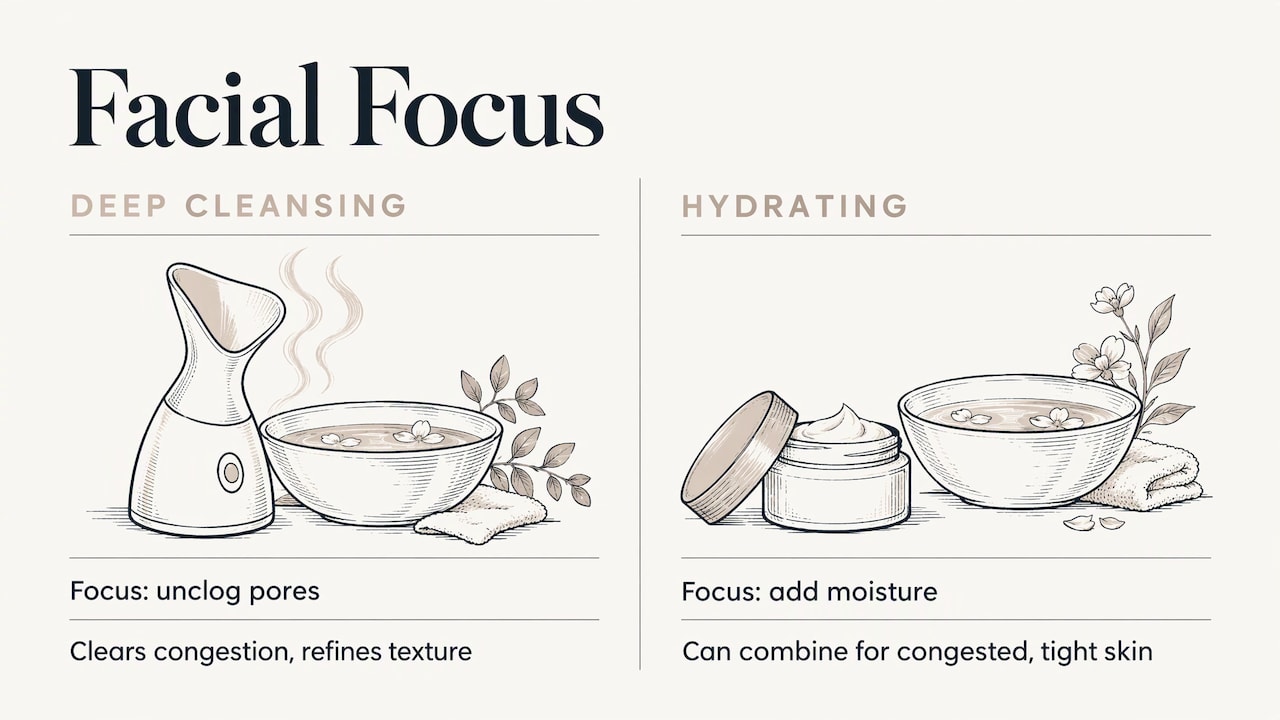
It differs from a hydrating facial in its focus. A deep cleansing facial concentrates on clearing congestion and refining texture, while a hydrating facial concentrates on moisture. If your skin is both congested and tight, which is common in Colorado’s dry air, a good esthetician can combine the two approaches in one visit. Our guide to facials that combat Colorado’s dry climate covers the hydration side.
What happens during the treatment, step by step
Exact products and techniques vary by esthetician, but a professional facial follows a predictable sequence: cleansing, skin analysis, exfoliation, steam, optional extractions, a treatment mask, serum and moisturizer with SPF. A deep cleansing version typically looks like this.
- Consultation. Your esthetician looks at your skin type and concerns and asks about sensitivities, medications and your home routine. Tell them everything, including retinoids, recent peels or waxing, and any history of reactions.
- Cleansing. Makeup, sunscreen, dirt and surface oil come off first, often in two passes.
- Exfoliation. A physical scrub, a chemical exfoliant or an enzyme peel loosens dead cells and prepares the pores. Dr. Whitney Bowe’s point, widely repeated, is that proper exfoliation leaves pores ready to be cleared and the skin more receptive to serums.
- Steam. A few minutes of warm steam softens the skin and the plugs inside the pores.
- Extractions. Blackheads, whiteheads and milia are removed by hand with proper technique and sterile tools. More on this below.
- High-frequency therapy (optional). A gentle electrical current is sometimes used to calm inflammation and target acne-causing bacteria.
- Soothing mask. This calms redness and returns hydration.
- Toner and serum. Skin is ready to absorb active ingredients at this point.
- Moisturizer and SPF. A lightweight, non-comedogenic moisturizer finishes the treatment, with broad-spectrum SPF if it is daytime.
Some facials designed for acne-prone skin also bring in salicylic acid or benzoyl peroxide, and some use blue LED light to reduce inflammation, according to UPMC. UPMC adds that salicylic acid works so well because it exfoliates inside the pores.
Do they pop blackheads during a facial?
They extract them, which is different from squeezing at home. Extractions are the most debated part of a facial. Done well, with softened skin and sterile instruments, they can clear congested pores more effectively than a topical product. Good technique means correct preparation, the right pressure and angle, and knowing when to stop. Not every plug comes out cleanly, and forcing a stubborn one can push bacteria deeper and create an inflamed bump.
The American Academy of Dermatology notes that picking at pimples yourself risks scars, worse lesions and infection, and that comedo removal can help lesions that resist other therapy when it is done with sterile instruments. So extractions belong in a treatment room, not at your bathroom mirror.
Inflamed pimples are the exception. Red, swollen papules and pustules are too deep and too tender for manual removal, so a careful esthetician will leave them alone and work around them.
What results to expect
Facials can boost hydration, remove dead skin cells, improve texture, clear clogged pores and add radiance, according to board-certified dermatologist Dr. Marisa Garshick, and some also stimulate collagen. Right after a session, most people notice smoother, clearer-looking skin with fewer visible blackheads.
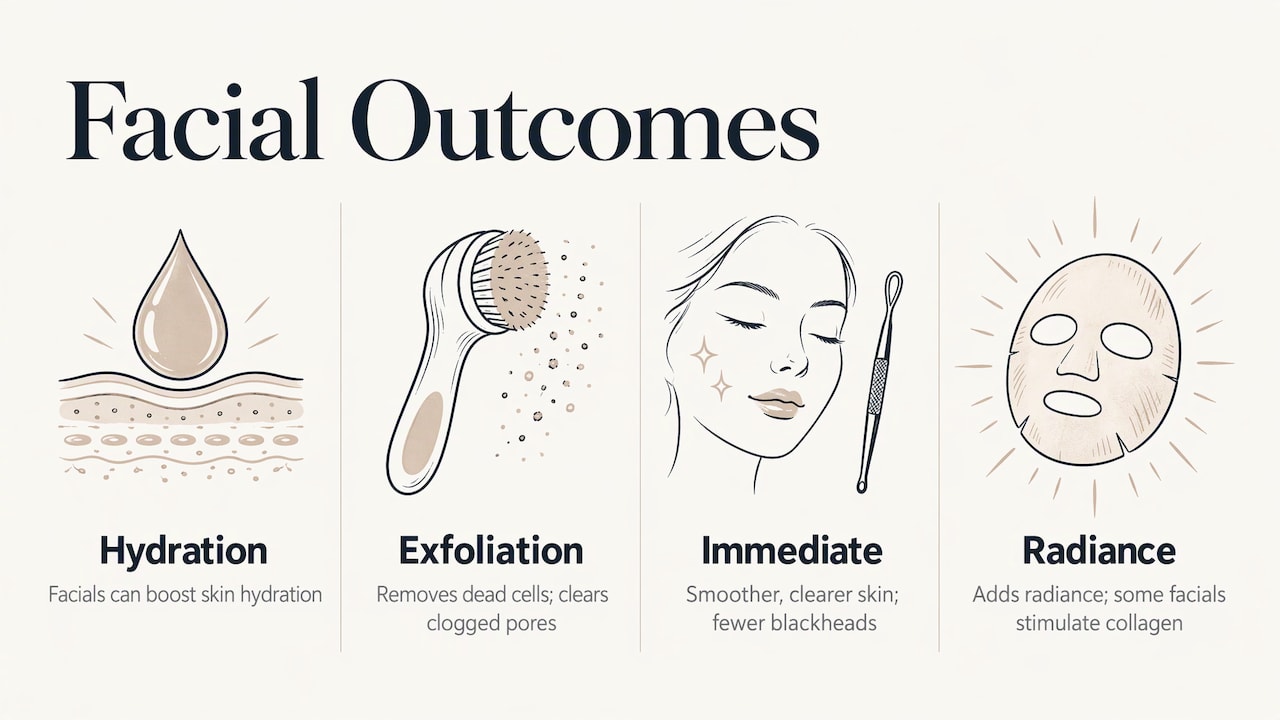
Keep expectations honest. Facials cannot cure acne, and for most people the effects are minor and temporary. That is the reason regular visits and a sensible home routine matter more than any single appointment.
If pores are your main concern, it helps to understand what each tool does. A deep cleansing facial clears what is inside the pore. Treatments that work on the skin’s structure are a different category, and this overview of microneedling for pores explains what that route can and cannot do.
Who it suits, and who should be careful
Good candidates: oily or combination skin, small non-painful white or black bumps, dull or rough texture, and anyone who feels their skin is weighed down by congestion.
Talk to a dermatologist first if you have:
- Extremely sensitive skin, active cystic acne, rosacea or eczema. Steaming or extractions can aggravate these conditions.
- Numerous red, painful sores. Acne facials are generally safe with small, non-painful pimples and not with many red, painful ones.
- Open wounds, lesions or sunburn. Postpone the facial until they have healed, and check with a professional before booking if you have active rosacea or eczema.
UPMC points out that the risk rises when the esthetician is not trained to spot underlying conditions, so work with a licensed provider, share your skin history and follow pre- and post-care instructions. If you are using prescription retinoids or have recently had a peel, mention it when you book so the protocol can be adjusted.
How often to get a deep cleansing facial
Most dermatology professionals suggest a facial every 4 to 6 weeks, which lines up with the skin’s turnover cycle of roughly 28 to 40 days. Some people do well with monthly visits, others with every 6 to 8 weeks.
A practical way to set your own rhythm:
| Your situation | Reasonable rhythm |
|---|---|
| Oily, congested skin that refills quickly | Every 4 weeks |
| Combination skin, occasional breakouts | Every 4 to 6 weeks |
| Normal or dry skin, maintenance only | Every 6 to 8 weeks |
| Sensitive or reactive skin | Less often, and only after a professional assessment |
Too much of a good thing is possible. Products and techniques that are too harsh or too frequent for your skin can cause irritation, so frequency should follow how your skin responds, not a fixed calendar.
Side effects and aftercare
Possible side effects of acne-focused facials include irritation, dryness, oiliness, sun sensitivity, bruising and, rarely, burns, scarring or discoloration. Mild redness for a few hours is common. Anything persistent, painful or blistering deserves a call to your esthetician and, if it continues, a dermatologist.
Simple aftercare keeps results and prevents problems:
- Go easy on makeup. Dr. Sejal Shah advises a break from makeup and heavy products for a day or so, because pores are more open than normal.
- Skip toners for a day or two. Dr. Joshua Zeichner recommends this, especially for alcohol-based, exfoliating or astringent toners, which can irritate.
- Wear sunscreen. Skin can be more sensitive to sun after a facial, so use broad-spectrum SPF daily and avoid prolonged sun.
- Hold off on actives. Pause strong exfoliants and retinoids until your esthetician says you can resume them.
- Do not pick. Anything left after extractions will settle by itself.
- Moisturize. Skin is primed for absorption after a facial, and a well-formulated ceramide moisturizer is a sound choice.
Our perspective
At Silver Palm, we think a deep cleansing facial works best as part of a plan, not a one-off fix. We are a luxury salon and spa in Littleton, and what we care about is personalized attention: your skin is assessed before anything touches it, and the treatment is shaped around what it needs that day.
That is the idea behind our Signature Custom Facial, which is designed to adapt to your skin type and concerns. For clients who want a more technical approach to congestion and texture, our DermaSweep Facial is another option, and we also offer high frequency skin treatments and LED therapy for skin that benefits from added support.
We also believe the setting matters. Skin responds when you are relaxed, and an upscale, calm room is part of the treatment. If your concerns go beyond what a facial can do, our medspa services, including chemical peels, are there as the next step.
Silver
Book a facial in Littleton
If you are in Littleton, Denver, Lakewood or Morrison and want a facial built around your skin, see our Signature Custom Facial and DermaSweep Facial. For a comparison of types and what to expect, read facials in Denver. If you want a deeper exfoliating step beyond a facial, take a look at our chemical peels in Littleton.
FAQ
How long does a deep cleansing facial take?
Plan on about an hour. Most professional facials run around 60 minutes, and treatments with extended extractions or add-ons can take longer. Arrive with a clean schedule so you are not rushing into errands or a workout.
Is a deep cleansing facial good for acne?
It can help with small, non-inflamed blackheads and whiteheads, but it does not cure acne. If you have many red, painful pimples or cystic acne, see a dermatologist before booking a facial.
What should I do before my appointment?
Come with your usual routine in mind and tell your esthetician about retinoids, peels, waxing, medications and past reactions. Avoid sunburn beforehand, and do not pick at your skin in the days before. Following pre-care instructions is part of safe treatment.
When can I wear makeup after a facial?
If you can, wait a day. Pores are more open right after treatment, so heavy makeup and products are best avoided for about a day. If you must wear makeup, keep it light and clean your brushes first.
Sources
- Facials for acne: Use and effectiveness, Medical News Today
- Facials 101: How to Choose a Treatment and What to Expect, Byrdie
- Do Facials Really Help Your Skin?, UPMC
- Professional Facials: Are They Worth It?, School of Dermatology
- Deep Cleanse Your Way to Clean, Clear Skin, International Dermal Institute
- Debunking Acne Myths: Does Popping Pimples Resolve Acne Faster, MDedge
- What to Do After a Facial, SELF
- How Often Should You Get a Facial?, Kalon Dermatology
- Microneedling for Pores: What It Can and Can’t Do, NEOConcepts