Can a pedicure help cracked heels? Learn what a salon pedicure improves, when to skip it, and the aftercare that keeps heels smooth between visits.
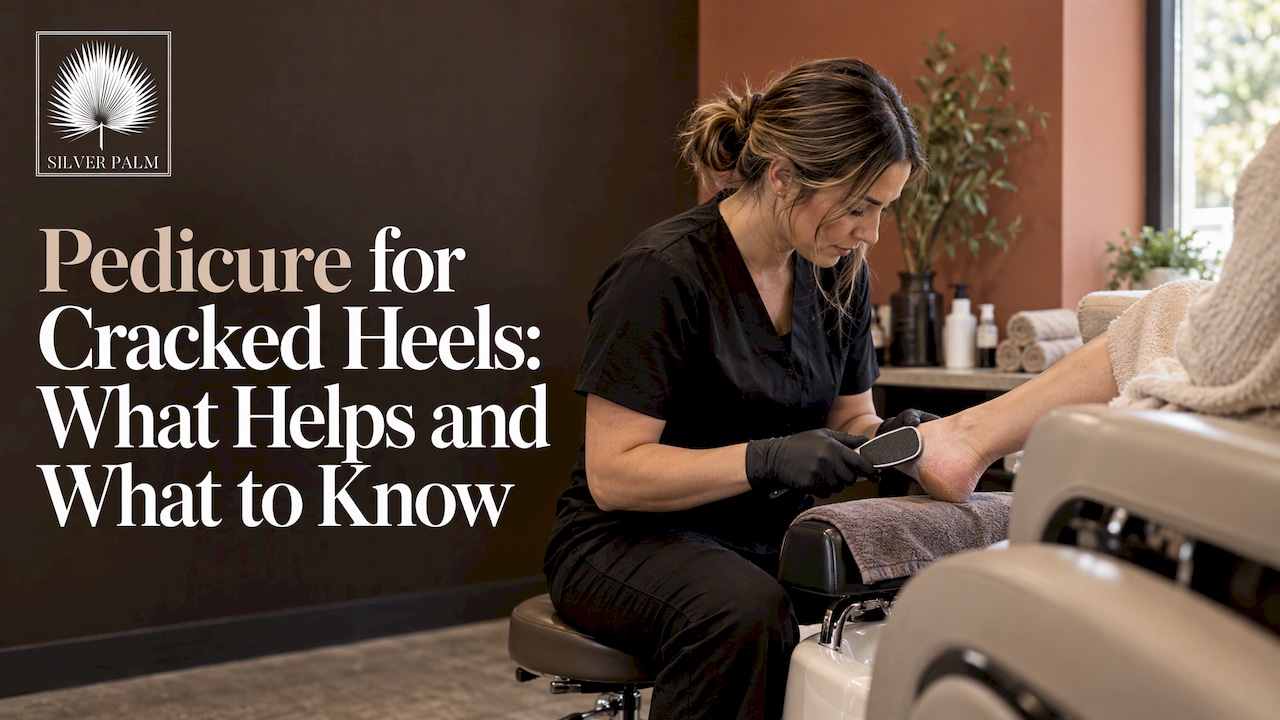
Yes, a professional pedicure can help with dry, rough heels. Soaking or softening, gentle exfoliation and rich moisture are what lift dead skin and make heels feel and look smoother. It works best on mild to moderate dryness, when the skin is intact. If a crack is open, bleeding, painful or showing signs of infection, skip the salon and see a doctor first. Below you’ll find what a heel-focused pedicure involves, what it can realistically improve, how to keep results going at home, and when to put your feet in a clinician’s hands instead.
Key Takeaways
- A pedicure can smooth thick, dry heel skin through exfoliation and deep moisture. It is a cosmetic and comfort service, and it is most useful on skin that is dry but not broken.
- Postpone any pedicure if cracks are open, bleeding or painful, or if you see redness, warmth or pus. Those cracks need medical advice before any salon work.
- Between visits, results depend on daily care: short showers, a gentle cleanser and a 10% to 25% urea moisturizer applied while skin is still damp.
- If you have diabetes, neuropathy or poor circulation, deep or non-healing cracks should be seen by a podiatrist or your clinician before any home or salon treatment.
- At Silver Palm in Littleton we offer the Silver Stone Pedicure in a calm, upscale setting. Tell your technician about your heels when you book.
Table of Contents
- Do Pedicures Help Cracked Heels?
- What Happens in a Pedicure for Cracked Heels
- When to Skip the Pedicure and See a Doctor
- Preparing for Your Appointment
- Perspective: Why We Treat Heel Care as Part of the Whole Visit
- Keeping Heels Smooth Between Pedicures
- How Often to Book a Pedicure for Dry Heels
- Pedicure Options at Silver Palm
- FAQ
- Sources
Do Pedicures Help Cracked Heels?
For most people with dry, calloused heels, yes. Heels crack because the skin is thick and dry, loses elasticity and then splits under pressure when you stand or walk. MyHealthyFeet lists open-back shoes, long hours on your feet, low humidity, hot showers, harsh soaps, going barefoot and aging among the usual contributors. A pedicure tackles two parts of that chain: the layer of dead, hardened skin that builds up, and the lack of moisture that lets it split.
A podiatry practice notes that regular pedicures can bring mild relief by keeping the skin as smooth as possible. That is the realistic promise. A pedicure keeps the skin supple and the buildup under control. It is not a cure for the cause, whether that is your footwear, your skin type or a health condition.
What a pedicure can realistically improve
- Rough texture. Removing dead surface skin makes heels feel softer within one visit.
- Visible flaking and dullness. Exfoliation and a rich finishing treatment improve how heels look, which matters for sandal season.
- Surface dryness. Deep moisturizing and a massage leave the skin more comfortable for days.
- Callus buildup. Regular visits stop thick patches from getting to the point where they split.
What it cannot do
A pedicure cannot replace medical treatment for deep fissures, infections or skin conditions such as eczema. It also can’t undo the habits that dried out your heels in the first place. That is why the aftercare section below matters as much as the appointment itself.
What Happens in a Pedicure for Cracked Heels
A heel-focused pedicure follows the same flow as a classic pedicure, with extra time spent on the heels. If you want the full walk-through of timing and safety, see our guide to the classic pedicure. Here is how the heel work typically goes.
- Consultation. Your technician looks at your feet and asks about pain, bleeding, diabetes, circulation and any recent skin problems. This is the moment to mention anything unusual.
- Cleansing and softening. Feet are cleansed and the skin is softened. Some salons use a traditional soak. Trade publication NailPro describes a waterless approach as the treatment of choice for heel fissures when the client is safe for service: wipe the feet with a warm, wet towel, dry them, apply a waterless cleanser and massage until dry.
- Callus smoothing. In that same method, calluses are scrubbed for one to two minutes per foot. Light, controlled pressure is the goal. Aggressive removal is not.
- Exfoliation. A scrub sloughs off loosened dead skin and evens out the surface.
- Moisture and massage. A rich cream or butter is worked into the heels and the rest of the foot, usually with a relaxing massage.
- Finishing. Nails are shaped and polished if you like, and you’re given aftercare advice.
Some salons add a paraffin or heel-peel style step. These are optional extras that deepen the moisture. Ask your technician which options suit your skin on the day.
How salons remove dead skin
Professionals use gentle abrasion and exfoliating products rather than anything that cuts. Licensed technicians work within state rules. In Colorado, the state’s cosmetology rules require that people providing services in a salon hold current, valid licenses and set cleaning standards for equipment such as pedicure foot spas. Sharp tools like lancets and disposable razors must be discarded in puncture-resistant containers. Ask any salon how it cleans its tools and tubs between clients. A well-run one will be glad to tell you.
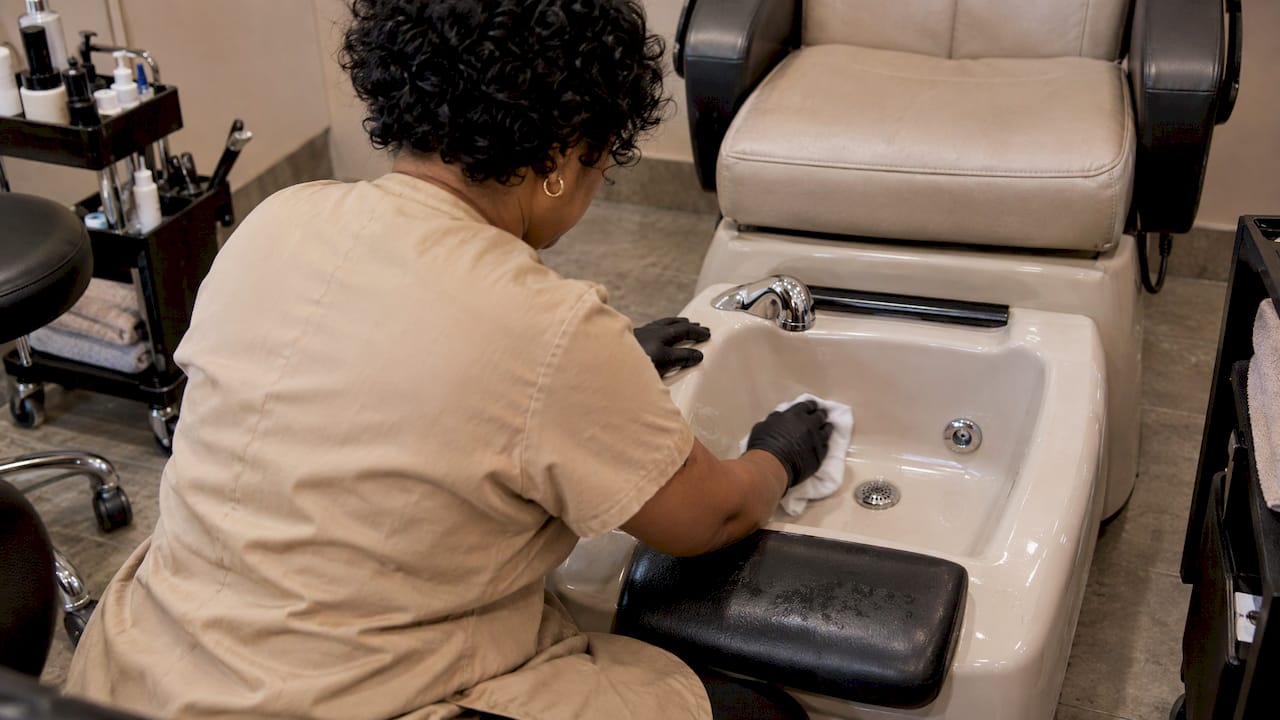
At home, Henry Ford Health advises never using a blade or grater on your own skin, because it removes too many layers and leaves feet open to infection. It suggests a pumice stone as a gentle way to slough off the top layer. Gentle is the keyword in every setting.
When to Skip the Pedicure and See a Doctor
This is the most important section of the article. A pedicure suits skin that is dry and rough but intact. It does not suit a wound.
Postpone the appointment and get medical advice if you notice any of the following:
- Cracks that are open, bleeding or painful. NailPro advises that a client with signs of possible infection such as redness, bleeding or openings should not receive a pedicure and should be referred to a doctor.
- Redness, warmth, swelling, pus or fever. iMedic lists these as reasons to see a doctor, along with deep bleeding fissures and heels that haven’t improved after two weeks of home care.
- Severe cracks, or cracks that don’t improve with the at-home steps. The American Academy of Dermatology advises talking to a board-certified dermatologist in that case.
- Heels that stay painful despite moisturizing. Great Midwest Foot and Ankle describes cracks that hurt, bleed or fail to respond to home care as more serious and worth a podiatrist visit.
A foot and ankle specialist can look for fungal or bacterial involvement, remove thickened tissue and prescribe stronger creams, according to Foot Health Facts. The same source says surgery is rarely needed when fissures are treated early, but a fissure that progresses to an open wound is at risk of infection.
If you have diabetes or reduced sensation
Extra care applies. Reduced feeling can hide how deep a crack has become, so judge by what you can see, not by pain alone. The AAD’s skin care guidance for people with diabetes stresses treating dry, cracked heels to help prevent serious infection and sores that won’t heal. It also recommends immediate medical care for a wound that leaks pus or other fluid, and for signs of infection such as swelling, discoloration, tenderness or honey-colored crusts. If you have diabetes, neuropathy or peripheral arterial disease and a crack is deep, bleeding, draining or not healing, see your podiatrist or doctor before booking anything at a salon.
Preparing for Your Appointment
A little preparation helps your technician do the best job and keeps you safe.
- Check your heels first. Look at both heels in good light. If you see open cracks, blood or redness, call to reschedule.
- Share your health history. Mention diabetes, circulation problems, eczema, fungal infections or any recent foot injury.
- Skip shaving beforehand. Fresh nicks on the legs and feet are an avoidable irritation point.
- Say what bothers you. Tell us whether you want a purely relaxing session or a heel-focused one. Our team can then tailor the time and products.
- Wear open-minded footwear plans. Bring comfortable sandals or socks and shoes you can slip on easily, so you aren’t rubbing freshly smoothed heels.

Perspective: Why We Treat Heel Care as Part of the Whole Visit
At Silver Palm, we think a pedicure should be more than polish. Heels are where dryness shows first, and they’re where regular, attentive care makes the most visible difference. That is why we pair careful skin work with the unhurried, personal attention our clients come to us for.
We design each visit around the person in the chair. Our Silver Stone Pedicure and our other spa services are meant to leave you rested, with feet that feel cared for. We begin with a conversation about your feet and your health, because the right treatment depends on the condition of your skin that day.
Being a full-service salon and spa also matters. Many of our clients pair a pedicure with a massage, a facial or a hair appointment, so self-care happens in one calm, upscale place in Littleton. We believe consistent, gentle care beats a one-off fix, and we would rather help you build a routine that keeps your heels comfortable than promise a miracle.
Silver
Keeping Heels Smooth Between Pedicures
The pedicure is the reset. Daily habits decide how long it lasts. These steps come from dermatology and foot-health sources.
Shower smarter
The AAD recommends keeping baths and showers to 5 to 10 minutes, since longer bathing dries skin and can make cracked heels worse. Use a gentle, fragrance-free cleanser rather than a harsh soap.
Moisturize at the right moment
The same AAD page says to moisturize within 5 minutes of bathing, applying the product to your heels while skin is still damp. Look for moisturizers that contain 10% to 25% urea, or alpha hydroxy acid or salicylic acid. Urea creams help break down thickened skin, which is why they appear on most heel-care lists.
A simple daily routine
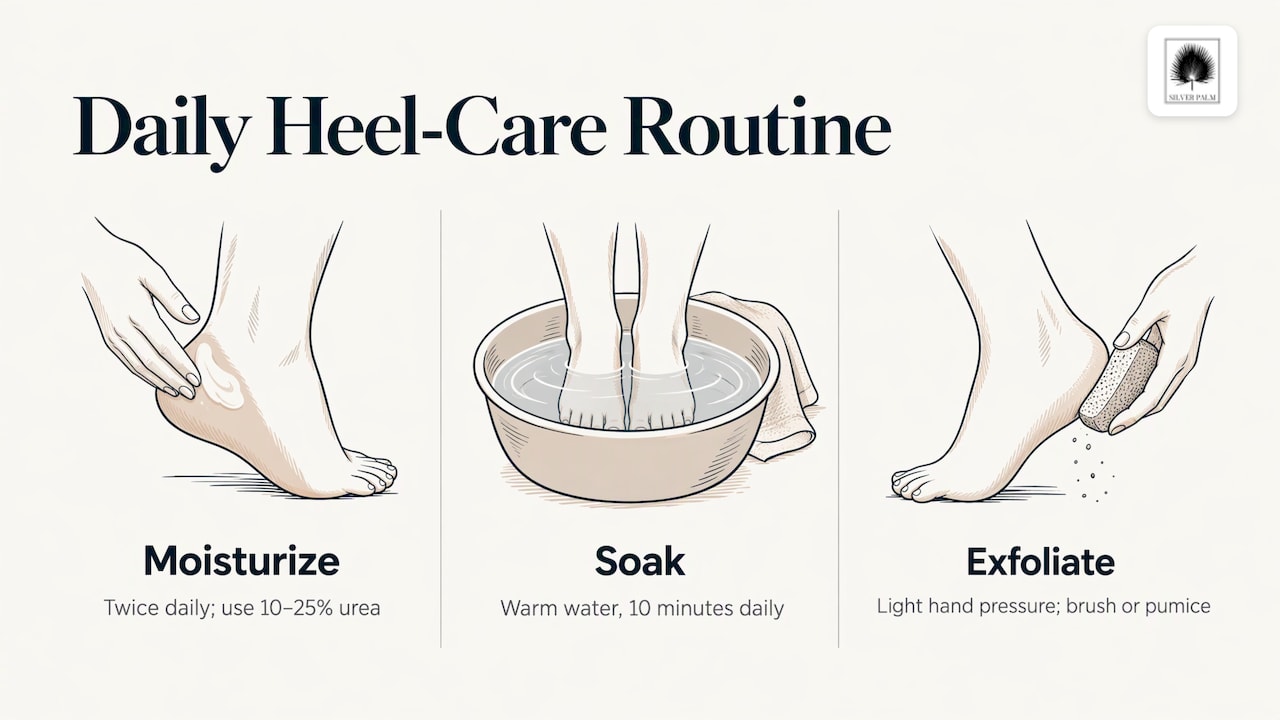
Foot Health Facts describes home care as the first line for thick calluses: moisturize twice a day with a product containing alpha hydroxy acids, salicylic acid or 10% to 25% urea, soak feet in warm (not hot) water for 10 minutes daily, and exfoliate by hand with light pressure using a scrub brush or pumice.
Overnight treatment
For an extra boost at bedtime, the AAD’s diabetes guidance describes applying a 10% to 25% urea cream to the heels, covering it with a thick layer of petroleum jelly or ointment, and wearing white cotton socks in bed every day until the skin heals. People with diabetes should follow that routine under their clinician’s guidance. Others often borrow the same idea for stubborn dryness.
If you like a warm soak at home, a portable foot bath massager can make the daily ten minutes feel like a small ritual. Keep the water warm, never hot, and moisturize right afterward.
Easy habit changes
- Swap open-back sandals for closed-heel shoes when you’ll be on your feet all day.
- Avoid going barefoot on hard floors at home.
- Dry your feet gently, including between the toes, after every wash.
- Add humidity to dry indoor air during Colorado winters. Low humidity is one of the contributors listed by MyHealthyFeet.
How Often to Book a Pedicure for Dry Heels
There is no official schedule. A common approach is to book regularly enough that buildup never gets thick, then adjust. If your heels are very dry in winter or you wear sandals all summer, you may want to come more often during those seasons. If your heels stay rough between visits despite good home care, mention it to your technician and consider checking in with a podiatrist to rule out an underlying cause.
Dry or cracked skin can occasionally be a subtle sign of something larger. Foot Health Facts notes that it may point to problems such as diabetes or loss of nerve function. If your heels crack despite good habits, mention it at your next medical checkup.
Pedicure Options at Silver Palm
Our Silver Stone Pedicure and Classic Manicure are on our nails services page, and you can read what to expect from start to finish in our classic pedicure guide. We don’t publish a price for our pedicures online, so the page above is the place to check current details or to book your appointment in Littleton.
Many clients make an afternoon of it. A massage after your pedicure extends the relaxation, and our facials are a natural pairing if you want your whole routine looked after in one visit. When you book, mention that heel dryness is your priority so we can plan your time well. Silver Palm serves the Littleton area and neighboring communities such as Denver, Lakewood and Morrison.
FAQ
Do pedicures help dry cracked heels?
They can help with mild to moderate dryness. Exfoliation removes dead skin and moisturizing treatments soften what remains, so heels feel smoother and look better. Pedicures are not a treatment for open, bleeding or infected cracks, and results last longest when you also moisturize at home.
What is the fastest way to heal cracked heels?
There is no instant fix, but the dermatology basics work. Keep showers to 5 to 10 minutes, use a gentle cleanser, and apply a 10% to 25% urea moisturizer to heels within 5 minutes of bathing, according to the AAD. If cracks are severe or don’t improve, see a board-certified dermatologist or podiatrist.
What do salons use to get dead skin off feet?
Technicians use gentle exfoliation: scrubs, softening products and light abrasion on calluses, followed by moisturizer. In the waterless method described by NailPro, calluses are scrubbed for one to two minutes per foot. Licensed technicians in Colorado work under state rules that include cleaning standards for equipment.
Should I get a pedicure if my heels are bleeding?
No. Postpone the pedicure if cracks are open, bleeding or painful, and get medical advice. Once the skin is healed or a clinician has cleared you, a pedicure can help keep heels smooth again.
What vitamin are you lacking when you have cracked heels?
Most cracked heels come from dry skin and pressure rather than a vitamin shortfall. The sources we reviewed point to dryness, footwear, standing and aging as the usual causes. If your heels keep cracking despite good care, ask your doctor to look for an underlying cause rather than self-diagnosing.
Sources
- How to care for dry, cracked heels, American Academy of Dermatology
- Dermatologist-recommended skin care for people with diabetes, American Academy of Dermatology
- How To Treat Clients With Heel Fissures, NailPro
- Cracked Heels – Fissures, Foot Health Facts
- How To Smooth Rough Feet, Henry Ford Health
- Cracked Heels (Dry Heels): Causes, Remedies and Treatment, MyHealthyFeet
- Cracked Heels Causes and Treatment, Great Midwest Foot and Ankle
- Heel Fissures: Causes, Treatment and Prevention, iMedic
- Can Having Regular Pedicures Help to Heal Cracked Heels?
- Barbering and Cosmetology Licensure Rule 1, Colorado Secretary of State
- Mini Foot Massager Portable Ion Foot Bath