
A callus removal pedicure softens and smooths thick skin on your heels and soles. Learn how it works, what to avoid, and who should see a podiatrist first.
A pedicure can make a callus much smaller, smoother and more comfortable, but it will not erase it, and it should not. A callus is thickened skin your body builds where pressure or friction hits your feet, so the goal of a good callus pedicure is to soften it and reduce it gently, not to scrape it away. At Silver Palm in Littleton, our nail services include pedicures like the Silver Stone Pedicure, and the guide below tells you exactly what a careful callus treatment looks like so you can book with confidence.
Key Takeaways
- A pedicure reduces a callus rather than eliminating it. Sole calluses are protective, so the aim is smooth and comfortable, not bare.
- A careful treatment softens the skin first, then files it gently. Professionals warn against foot razors because removing too much skin can cause bleeding and infection.
- Over-the-counter callus removers use salicylic acid and are not for people with diabetes or poor circulation.
- If you have diabetes, poor circulation or a painful callus, see a podiatrist before booking a salon pedicure.
- Regular moisturizing and well-fitting shoes keep calluses from coming back quickly.
Table of Contents
- What a callus is and why it forms
- Can a pedicure get rid of a callus?
- How callus removal is done during a pedicure
- Safe callus removal: what to look for
- Callus softeners, acid removers and home care
- Who should see a podiatrist before a salon pedicure
- Regular pedicure or medical pedicure for calluses?
- How much does a callus removal pedicure cost?
- Preparing for your appointment
- Keeping calluses from coming back
- Book a pedicure in Littleton
- FAQ
- Sources
What a callus is and why it forms
A callus is a patch of hardened, thickened dead skin. It builds up where your foot rubs against a shoe or the ground: the heel, the ball of the foot, the side of the big toe. Think of it as your skin’s own padding.
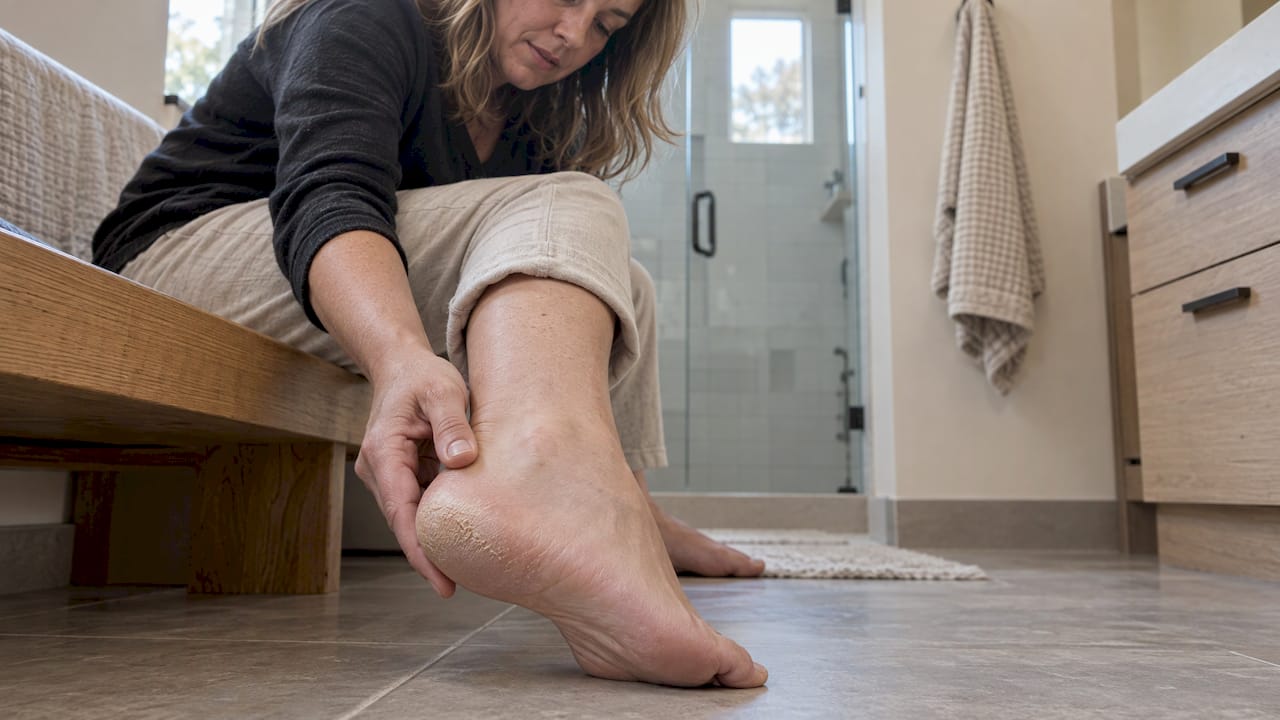
That is why a nurse practitioner at the University of Virginia describes a callus as armor for your skin and cautions against trying to get rid of one entirely. The American Podiatric Medical Association (APMA), the professional body for foot doctors in the US, adds that mild calluses that don’t bother you can probably be left alone, and that checking your footwear for the cause is worthwhile.
Most people book a callus pedicure for one of three reasons: the skin catches on socks and sheets, heels look dry and rough before sandal season, or the thickened area feels tight. All three are well suited to a professional pedicure.
Can a pedicure get rid of a callus?
It can reduce one a lot, and that is the right outcome. Nail Pro, a trade publication for nail professionals, explains in its guide to callus care that sole calluses are protective and should be reduced, not removed completely.
A single visit works on the surface of the callus. Over several visits, with moisturizing in between, thick skin tends to stay manageable. If a callus is large, painful or keeps returning, that is a job for a podiatrist, covered later in this guide.
How callus removal is done during a pedicure
The standard salon routine, as Nail Pro describes it, has four stages:
- Soften. The technician applies a urea-based callus softener to the sole and toes. Urea is a moisturizing ingredient that loosens hardened skin.
- File. An abrasive foot file buffs the softened skin until the dead layer rolls off.
- Refine. The softer side of the file smooths the area so there is no rough edge.
- Clean. A steamed towel wipes away the debris.
The American Academy of Dermatology (AAD) gives a similar logic for home care: soak the skin in warm water, then file gently with a pumice stone. The soak matters because dry, hard skin filed too aggressively is where trouble starts.
Why salons say “softener” and not “remover”
You may notice products labeled callus softeners. According to the same Nail Pro guide, a product that claims to remove calluses counts as a drug and needs FDA approval. The approved ingredient is salicylic acid, and those removers need repeated applications over two weeks or more. A salon product can’t work that way in one sitting, so it is sold as a softener and paired with a file.
Safe callus removal: what to look for
The difference between a pedicure that leaves your feet feeling wonderful and one that leaves them sore is how much skin comes off and with what tool.
- No foot razors. APMA’s pedicure guidance tells clients not to let a technician use a foot razor on dead skin. A razor can cause permanent damage if used incorrectly and can easily lead to infection if too much skin comes off. Say so at the start of your appointment.
- Soak first. APMA suggests soaking feet in warm water for at least five minutes, then smoothing the heel, ball and sides of the foot with a pumice stone, foot file or exfoliating scrub.
- Gentle pressure, no bleeding. The AAD warns that taking off too much skin can cause bleeding and infection. Skin that looks pink or shiny under a callus means enough has been done.
- Clean setup. The UVA nurse practitioner recommends a licensed facility where you can see the foot baths being drained and washed and the tools sterilized.
If anything stings, feels raw or pulls during the filing, speak up. A callus treatment should never hurt.
Callus softeners, acid removers and home care
Between visits, many people reach for a drugstore corn and callus remover. These contain salicylic acid, which dissolves the bonds holding hardened skin together. The Drugs.com monograph notes that self-treatment products use 12 to 40 percent salicylic acid for up to 14 days, and that they should not be used by people with diabetes or poor blood circulation.
A typical product label, such as this liquid corn and callus remover on DailyMed, lists the same cautions: external use only, not on infected, reddened or irritated skin, and not for anyone with diabetes or poor circulation. APMA adds that some over-the-counter products contain harsh chemicals that can cause burns or even foot ulcers, and Mayo Clinic notes they can irritate healthy skin.
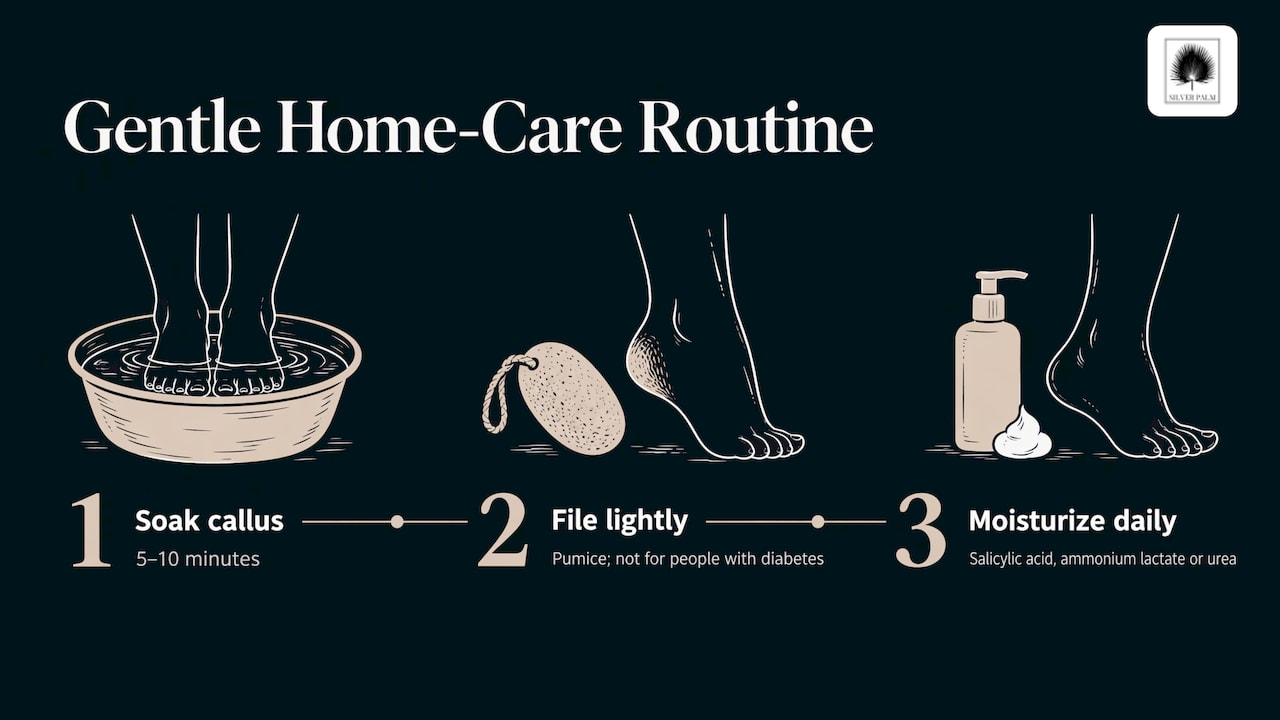
The gentler routine is the one dermatologists describe. Soak the callus for about 5 to 10 minutes, file lightly with a pumice stone using circular or sideways motions, and then use a daily moisturizer containing salicylic acid, ammonium lactate or urea so hard skin softens gradually. Mayo Clinic also suggests petroleum jelly on the surrounding skin when using any medicated pad. Pumice is not for people with diabetes.
Who should see a podiatrist before a salon pedicure
This is the safety part that matters most. APMA says that if you have diabetes or poor circulation in your feet, you should consult a podiatrist, who can recommend a customized pedicure that you and your salon can follow. The UVA nurse practitioner explains why: with poor circulation or nerve damage you may not feel a sore, and infection risk is higher. She also advises people with plantar warts, athlete’s foot or toenail fungus not to get salon pedicures.
See a podiatrist as well if:
- the callus is painful or limits your daily activities, as APMA advises;
- the callus keeps coming back after treatment;
- the skin is cracked, bleeding, red or looks infected.
Larger calluses are most effectively reduced in a podiatrist’s office with a surgical blade, which is painless because the skin is already dead. Mayo Clinic says this is work for a health care provider and not something to try yourself. Once a podiatrist has cleared your feet, a salon pedicure is a pleasant way to maintain them.
Regular pedicure or medical pedicure for calluses?
A medical pedicure is usually offered in a podiatry practice, where a foot specialist assesses the skin and can address conditions. A salon pedicure is a cosmetic service focused on smoothing, shaping and polishing. For everyday heel and ball-of-foot calluses on healthy feet, a salon pedicure that follows the soften-and-file routine covers what most people want. If your feet have a medical concern, start with the podiatrist.
How much does a callus removal pedicure cost?
Prices vary by city and by the treatment, and callus work is often an add-on to a standard pedicure. For Silver Palm’s current pedicure options and pricing, see our nail services page. Our guide to the classic pedicure walks through steps, timing and cost, and the luxury pedicure page shows what a more indulgent version includes.
Preparing for your appointment
A few small habits get you better results:
- Arrive with dry, unshaved heels. You do not need to scrub beforehand. Let the technician assess the skin.
- Tell the technician what bothers you. Point to the spots: a catch on the heel, tightness on the ball of the foot.
- Mention medical conditions. Diabetes, circulation problems, nerve issues and any open skin are worth saying before the soak begins.
- Ask for no razor. It is a simple request, and it follows APMA’s guidance.
- Ask what is being used to soften the skin. A urea-based softener followed by a file is the routine described above.
Keeping calluses from coming back
Calluses return because the pressure returns. Three things slow them down:
- Shoes that fit. The UVA guidance lists properly fitting shoes first, with moleskin for friction spots.
- Daily moisturizer. A cream with urea or ammonium lactate keeps skin supple, as the AAD describes.
- Regular maintenance. Light filing after a warm soak between pedicures prevents the buildup from becoming thick.
If your main issue is dry, split heels rather than thick patches, our guide to pedicures for cracked heels covers what helps.
Our view on callus care
At Silver Palm, we think of a pedicure as part of looking after yourself, not a quick fix. Our approach to every service is personalized attention in a relaxing, upscale setting, and that suits foot care well: calluses differ from one person to the next, and so should the attention they get.
The best result is a foot that feels smooth and cared for, with the skin’s natural protection left in place. We would rather you leave comfortable and unhurried than chase a bare heel.
If you live in Littleton and want a pedicure as part of a wider self-care visit, our team is here to talk through what you want from your feet before you sit down.
Silver
Book a pedicure in Littleton
Silver Palm offers the Silver Stone Pedicure and Classic Manicure at our Littleton salon and spa. You can see the full list and book on our nail services page, or read about nail salon options in Littleton before you visit.
FAQ
Can a pedicure get rid of a callus?
A pedicure can reduce a callus significantly, leaving the skin smoother and more comfortable. It does not remove it completely, because sole calluses are protective. Regular care keeps them in check.
What dissolves hard calluses?
Salicylic acid is the ingredient that breaks down hardened skin, and it is found in drugstore removers used over about two weeks. Urea and ammonium lactate creams soften skin more gently over time. Anyone with diabetes or poor circulation should skip acid removers and ask a podiatrist.
What pedicure is best for calluses?
Choose a pedicure that starts with a warm soak and a softening product, then uses a file with gentle pressure and no razor. The skin should look smoother, not raw. If you have diabetes, circulation problems or a painful callus, begin with a podiatrist.
How much is a callus removal pedicure?
Cost depends on the salon and whether callus work is added to a standard pedicure. Check the nail services page for current pricing before you book.
Sources
- An In-Depth Guide to Callus Care, Nail Pro
- How to treat corns and calluses, American Academy of Dermatology
- Pedicure Pointers, APMA
- Corns and Calluses, APMA
- Corns and calluses: Diagnosis and treatment, Mayo Clinic
- Healthy Feet, Healthy Life: Foot Q&A, University of Virginia School of Nursing
- Salicylic Acid Monograph, Drugs.com
- Liquid Corn & Callus Remover label, DailyMed