Find the haircut for wavy hair that suits your wave pattern, thickness and face shape, plus what to ask your stylist and how to style it between visits.

The best haircut for wavy hair is one shaped around your wave pattern, your hair’s thickness and the way you actually style it. A cut that looks great on a photo can fall flat, or balloon at the ends, if it ignores those three things. Wavy hair rewards a stylist who cuts for movement and removes weight where it collects, and that is the kind of personalized consultation we build every haircut at Silver Palm in Littleton around.
This guide walks through the cuts that tend to work, how layers and bangs change the shape of waves, what changes for fine versus thick hair, and how much daily effort each option takes.
Key Takeaways
- Choose a cut by your wave pattern, hair thickness and face shape, not by a photo alone.
- Layers are the main tool for wavy hair: they remove bulk, add movement and keep the ends from looking bottom-heavy.
- Fine waves usually keep their fullness with a longer, mostly one-length cut. Thick waves usually need layers or tapered ends to lose weight.
- Mid-length and shorter cuts generally take less styling time than long ones, and bangs add a daily maintenance step.
- Bring photos, describe your routine honestly and ask your stylist how the cut will behave when it air-dries.
Table of Contents
- Know Your Waves Before You Pick a Cut
- The Cuts That Work Best on Wavy Hair
- How Layers, Bangs and Face-Framing Pieces Change the Shape
- Fine Waves Versus Thick Waves
- Matching a Cut to Your Face Shape
- How Much Styling and Upkeep to Expect
- What to Ask and Bring to Your Appointment
- Prepping Your Visit and Knowing the Cost
- Our Perspective: Why a Wavy Cut Starts With a Conversation
- Book Your Wavy Haircut in Littleton
- FAQ
- Sources
Know Your Waves Before You Pick a Cut
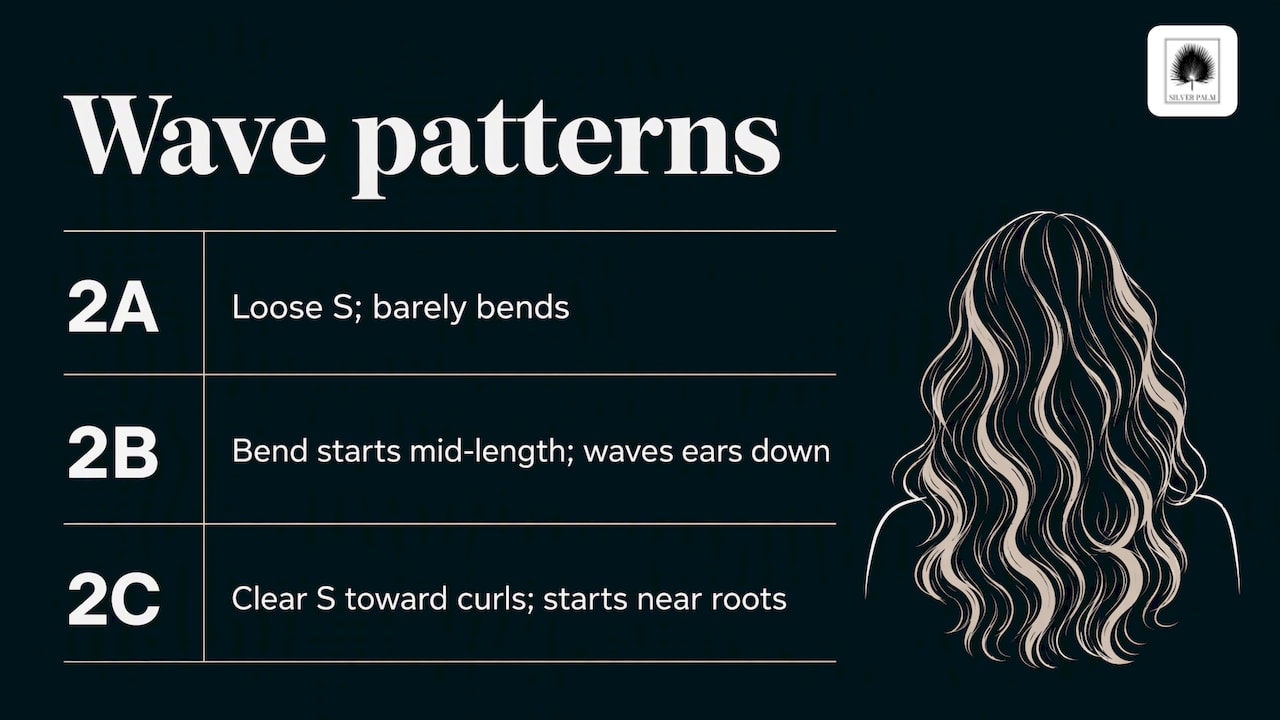
Wavy hair is not one texture. Stylists often sort it by how defined the S-shape is: 2A waves are loose and barely bend, 2B waves start the bend at mid-length, and 2C waves form clear S-shapes that edge toward curls. If you have ever wondered whether you are 2B or 2C, look at your hair air-dried with no product. Waves that only appear from the ears down are usually 2B. Waves that begin near the roots and hold a clear S are closer to 2C.
The pattern matters because the same cut behaves differently on each. Looser waves can look straight when cut very short or when weight pulls them down. Tighter waves spring up when cut short, so a bob that looks chin-length when wet can sit an inch higher dry.
A good wavy haircut accounts for face shape, hair type and curl pattern, since all three affect how a cut looks. That is why a quick trim from a salon chair that treats every head the same often disappoints wavy-haired clients.
The Cuts That Work Best on Wavy Hair
Wavy hair can carry a wide range of lengths. Pixies, bobs, long layers and shags all suit it, with shaping layers used to bring movement to wavy and curly textures. Here is how each tends to play out.
Long layers
Long layers are the safest starting point if you want to keep your length. They work with natural texture while removing bulk and creating shape. Vogue describes a long layered cut as a low-upkeep choice that lets the waves fall naturally. If your concern is a heavy, triangular silhouette, one stylist quoted by InStyle recommends very long layers, which avoid a bottom-heavy look without costing much length.
The lob and the long bob
A collarbone-length lob is popular because it keeps enough length for waves to stack without dragging them straight. Vogue notes that a long bob with gentle internal layering can help redefine waves, with one stylist crediting precision cutting that improves how waves clump together and removes blunt weight lines. In plain terms: the lines inside the cut matter as much as the outline.
Shoulder-length waves
At shoulder length, gentle layers add movement and subtle angles, and a blunt edge is not the recommended route for this look. Shoulder length is also a forgiving middle ground if you are not ready to commit to a bob.
The shag
Shags suit waves because the layers are the point. Vogue describes shags as pairing curtain bangs, feathered layers and textured ends for a lived-in look that works with wavy texture. If you like a tousled finish and do not mind a little more shape to manage, it is the most dramatic option here.
The pixie
A pixie works if you want minimal daily effort and are comfortable with a shorter cut. Because waves shrink as they shorten, ask your stylist to leave enough length on top for the wave to show rather than lie flat or spring into a curl you did not expect.
How Layers, Bangs and Face-Framing Pieces Change the Shape
Layers do two jobs on wavy hair. They remove weight so the wave can lift, and they decide where the volume sits. Too few layers and hair can look bottom-heavy. Too many, cut in the wrong places, can leave thin, stringy ends.
If you want movement without sacrificing length, face-framing layers can connect shorter front pieces to longer lengths and encourage movement without requiring layers everywhere. That is a good request for anyone who wants to keep a full perimeter.
Bangs on waves
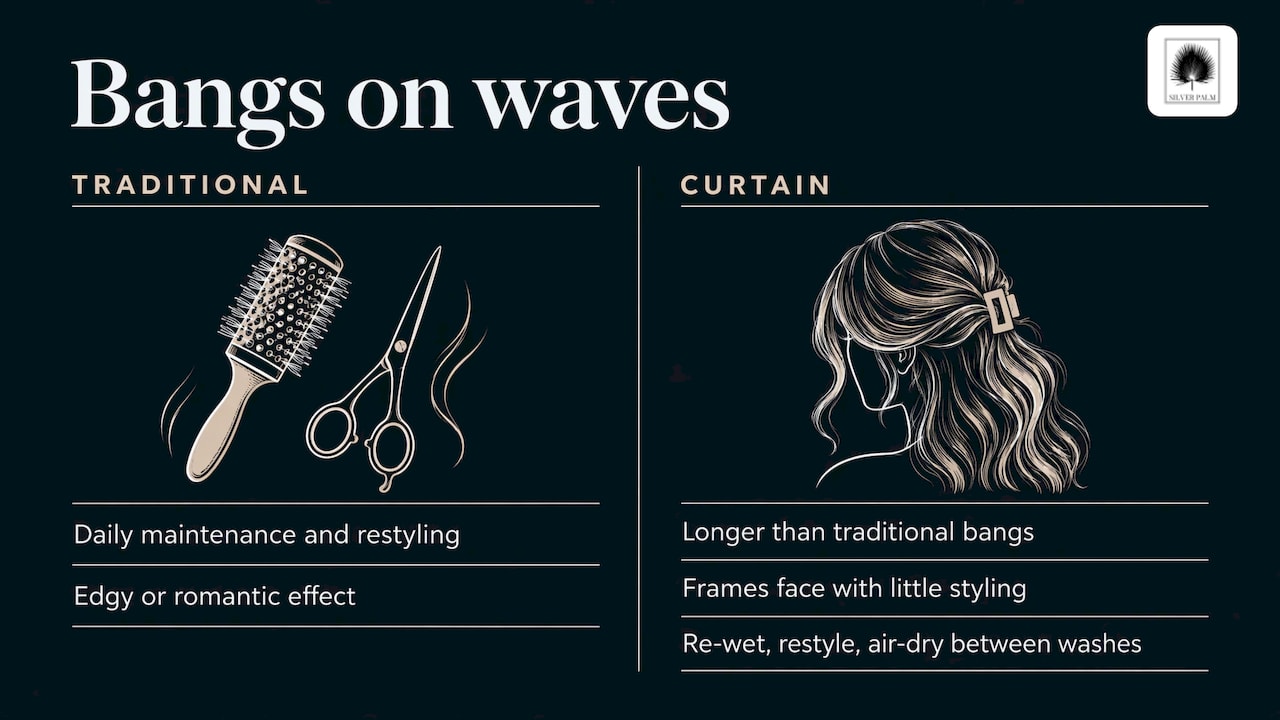
Fringe can add an edgy or romantic effect, but InStyle notes it requires daily maintenance and restyling. If that sounds like too much, curtain bangs are the gentler version. They frame the face with relatively little styling and can be swept back because they are longer than traditional bangs. If your bangs lose their pattern by midday, one stylist suggests you can re-wet, restyle and air-dry them to bring the wave back between washes.
Fine Waves Versus Thick Waves
Thickness changes the recommendation more than most people expect.
| Your hair | What tends to work | Why |
|---|---|---|
| Fine, wavy | A longer, mostly one-length cut with subtle face-framing pieces | Preserves fullness |
| Fine, wavy (shorter option) | Shorter cuts with long layers | Longer styles can weigh down fine waves, while this can bring out texture |
| Medium to thick, wavy | Layers throughout | Reduce weight and add movement and dimension |
| Thick, wavy | Layers, tapered ends or inverted shapes | Remove excess bulk |
If you have thick waves and like a little hold, a guide to hair clay for thick hair covers amount, hold and washing out, which helps you keep definition without heaviness.
Matching a Cut to Your Face Shape
Face shape is the third part of the equation. You do not need to memorize categories. Use these simple principles:
- Round faces: shoulder-length waves with gentle layers add movement and subtle angles, and blunt cuts are not the best fit for that look, according to Real Simple’s stylist guide.
- Longer faces: waves at chin or collarbone length add width at the jaw, which balances length.
- Square or angular faces: soft layers around the jaw and face-framing pieces soften the lines.
- Heart-shaped faces: curtain bangs and layers starting at the cheekbones keep attention balanced.
The last three are general styling principles, so treat them as starting points for a conversation with your stylist, who can see how your own hairline and wave pattern behave.
How Much Styling and Upkeep to Expect
Be honest about your morning routine before you choose. Mid-length and shorter cuts typically take less styling time for wavy hair than longer styles. Long layers sit at the easy end too, and bangs sit at the demanding end.
A simple wavy styling routine
- Start with soaking-wet hair. Apply product to soaking-wet hair, scrunch or shape the waves, and avoid touching as it dries to limit frizz.
- Choose a light product. A stylist quoted by Cosmopolitan recommends a moisturizing or lightweight styling cream to enhance definition and reduce frizz.
- Let it air-dry. ELLE’s air-drying guide quotes a stylist advising you to apply product to damp hair, scrunch gently and avoid excess touching.
- Refresh instead of re-washing. Air-dried hair can typically be refreshed after one to three days, depending on hair type, with water or a lightweight leave-in and a small amount of styling product.
A well-cut set of waves makes this faster. One first-person account in Marie Claire describes a styling routine of under five minutes for fine, thick 2B waves using leave-in conditioner and air-dry products. The cut does much of the work; the product only finishes it.
What to Ask and Bring to Your Appointment
Most disappointing wavy haircuts come from a gap between what you pictured and what the stylist understood. Close it before the scissors come out.
- Bring two or three photos, ideally of hair with a wave pattern close to yours. A photo of pin-straight hair styled with a curling iron will not tell your stylist much.
- Show your hair as it naturally dries. Arrive with your waves as they usually look, or show a photo of them air-dried.
- Describe your routine in minutes. Say whether you air-dry, blow-dry or diffuse, and how long you will spend each morning.
- Ask where the shortest layer will land and how the cut will look once your hair is dry, since waves shrink as they dry.
- Ask how often you should return. Shapes with layers and bangs need refreshing at different intervals than a one-length cut.
- Mention your hair history. Color, smoothing or lightening change how waves hold shape and how much a stylist can safely take off.
If you also color your hair, ask for the cut and color to be planned together. For ideas on blonde, our guide to heavy blonding versus soft dimension helps you decide on the level of lightness before you book.
Prepping Your Visit and Knowing the Cost
If you plan to get a blowout after your cut, our page on what a haircut and blowout includes, what it costs and how to prep walks through the visit. For reference, our published pricing starts at $75 for a women’s haircut and $50 for a men’s haircut, and a deep conditioning treatment starts at $45. Those are starting prices, so the final cost depends on your hair and the service you book.
Our Perspective: Why a Wavy Cut Starts With a Conversation
We think the best wavy haircuts are never a template. Waves change from one head to the next, and even on the same person they shift with the weather, with color and with length. That is why we put personalized attention at the center of every visit at Silver Palm.
When you sit down with us, we want to understand how your hair behaves on a regular morning, what you like about it and what frustrates you. A cut should fit your life, not just the photo you saved. We also care about the setting. An upscale, relaxing salon in Littleton means you can talk through the details without feeling rushed, which is when the best decisions about length, layers and bangs get made.
Because we offer cuts, color, treatments such as Olaplex bond repair and keratin smoothing, and extensions under one roof, we can plan the whole picture with you: the shape you want today and the hair you want in six months.
Silver
Book Your Wavy Haircut in Littleton
If you are ready to try a new shape, our women’s and men’s haircuts are booked online or in person at our Littleton salon. Many clients pair a cut with a deep conditioning treatment, and our treatments page lists Olaplex bond repair and keratin smoothing for those who want extra support for their hair. If you live in Lakewood, our guide to choosing a hair salon in Lakewood explains what to look for in a stylist you will keep.
FAQ
Which haircut suits wavy hair best?
There is no single winner, but long layers, a lob with gentle internal layering and a shag are the most common choices. Layers remove bulk and give waves room to move. Your hair’s thickness, wave pattern and face shape decide which of them fits you best.
What is the most low-maintenance haircut for wavy hair?
A long layered cut is described by Vogue as a low-upkeep choice, because it removes bulk and lets waves fall naturally. Mid-length and shorter cuts also generally take less styling time than long ones. Bangs add a daily step, so skip them if you want minimal effort.
Is hair type 2B or 2C wavy?
Both are wavy. 2B waves form an S-shape starting around mid-length, while 2C waves are more defined, often starting near the roots and edging toward curls. Look at your hair air-dried with no product to tell which is closer to yours, and tell your stylist so they can cut accordingly.
Should I get layers if I have fine wavy hair?
It depends on how much fullness you want to keep. A longer, mostly one-length cut with subtle face-framing pieces can preserve fullness, while a shorter cut with long layers can bring out texture. Ask your stylist where the layers will start so the ends stay full.
Sources
- The 48 Best Haircuts for Wavy Hair (Byrdie)
- 30 Wavy Haircuts That Enhance Your Natural Texture (InStyle)
- 8 Haircuts for Wavy Hair, Inspired by Celebrities (Vogue)
- 10 Best Hairstyles for a Round Face, According to Stylists (Real Simple)
- The Best Haircuts for Wavy Hair (Cosmopolitan)
- The Definitive Guide to Air-Drying Hair for Every Texture (ELLE)
- My 5-Minute Wavy Hair Routine for Frizz-Free Definition (Marie Claire)
- Wavy Hair Cuts: 16 Flattering Styles to Try (Hair.com)